Wedding Guest Dress Codes, Decoded: What Each One Actually Means
Published and reviewed by the Marín Brands Editorial Team. Elina Marín is an AI-created fictional editorial character of Marín Brands LLC.
Wedding dress codes can sound more complicated than they are. Black tie, formal, cocktail, semi-formal, dressy casual, garden party, and destination attire each signal a different level of formality—but they still leave room for personal style.
This guide breaks down what each wedding dress code actually means, what to wear, what to avoid, and how to choose shoes and accessories that fit the occasion. If the invitation feels vague, use the quick-reference chart below to decode the wording and build an outfit that feels polished, appropriate, and comfortable.
Most guests don’t. They Google the phrase, find six articles that contradict each other, and end up buying something they’ll wear once while quietly hoping it’s close enough. It usually is. But “close enough” is why so many people spend a wedding tugging at a hem or wishing they’d worn the other shoes.
The codes are actually quite specific. Here’s what each one means, what it doesn’t, and what to do when the invitation tells you nothing at all.
First, the invitation tells you more than the dress code
Before you decode the words, read everything around them. Four details do more work than the dress code itself.
The time. A ceremony at two means daylight photographs and a long gap before dinner. A ceremony at five means you’re dressing for evening from the start. Anything after four leans dressier by default, whatever the card says.
The venue. A hotel ballroom, a converted barn, a garden, and a beach are four different floors, four different temperatures, and four different shoe problems. The venue overrules the dress code on practical matters every time.
The season. The same dress in chiffon and in crepe is not the same outfit. Weight signals the season faster than colour does.
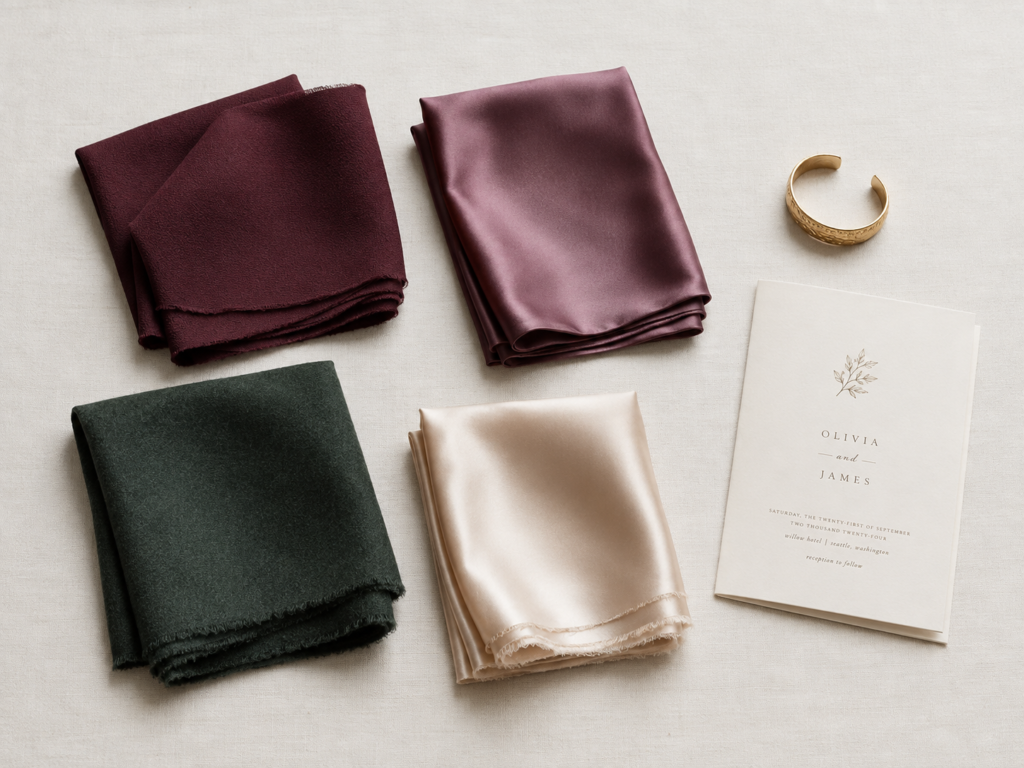
The paper. This sounds absurd, but a heavy engraved invitation and a digital RSVP link are telling you different things about the day. Couples signal formality in the stationery long before they get to the dress code.
Hold those four things in mind. Now the codes.
Black Tie
What it means: a floor-length gown or a very formal midi in a serious fabric. Silk, satin, velvet, heavy crepe.
What it doesn’t mean: your nicest cocktail dress. Black tie is the one code where under-dressing is genuinely visible, because everyone else will be in full length and you’ll be the only person who isn’t.
What people get wrong: treating it as optional. If a couple has written black tie, they’ve thought about it, and the room will be dressed. Believe them.
Jewellery and shoes: minimal and good beats plentiful and fine. One strong piece. Heels you can stand in, because black-tie weddings involve long receiving lines and longer photographs.
Black Tie Optional
If you prefer a more understated approach to formal dressing, explore more refined outfit ideas in The Style Edit.
The most misread code on any invitation is the one that causes the most anxiety.
What it means: the couple would love floor-length, but they’re not going to make you. A formal midi, a tailored jumpsuit, or an elevated separates combination all work.
What it actually signals: roughly half the room will be in full length. Dress toward the formal end, and you’ll be right either way.
The practical read: if you own something floor-length that fits properly, wear it. If you don’t, a rich midi in satin or crepe with good shoes and a proper coat reads entirely correct. What doesn’t work is a day dress with heels added.

Formal or Cocktail
For more occasion-ready inspiration, browse Shop Elina’s Edit for curated dresses, accessories, and finishing touches.
The most common code, and the most commonly misjudged in the other direction — people dress it down.
What it means: a midi dress, a tailored jumpsuit, or elevated separates. Not floor-length. Not a day dress.
What it doesn’t mean: the sundress you wore to a summer lunch, in a darker colour.
Where it goes wrong: length and fabric, almost always. A cocktail dress ends somewhere between just above the knee and mid-calf, and it’s made of something with weight — crepe, satin, heavy jersey, a fine wool blend. Get those two right, and almost anything works.
This is the code you’ll encounter most, and it’s worth understanding properly. The full breakdown lives in the cocktail outfit guide, including what changes between a two o’clock ceremony and an eight o’clock one.
Dressy Casual, or Smart Casual
What it means: the venue is relaxed, but the occasion isn’t. Usually an outdoor ceremony, a barn, a garden, or a restaurant reception.
What to wear: a midi in a softer fabric, or well-cut trousers with something considered on top. A silk shirt, a fine knit, a structured top.
What it doesn’t mean: jeans. Even when the couple says, “Honestly, jeans are fine.” They’re being kind. Somebody will wear jeans, and they will be the person in the photographs wearing jeans.
The trap: dressy casual is where people most often end up looking like they didn’t try. The word “casual” does a lot of damage. Read it as “dressy, in a relaxed fabric,” and you’ll be fine.
Garden Party
What it means: outdoors, daytime, and almost certainly on grass.
What to wear: a midi in a lighter fabric, a block heel or a sculpted flat, and something to cover your shoulders that you’ve chosen deliberately rather than grabbed on the way out.
The thing nobody warns you about: grass and stilettos. A thin heel sinks, and you’ll spend the reception walking on your toes. A block heel or a wedge solves it entirely and costs you nothing in elegance.
Hats: allowed, occasionally expected, and entirely your call. If you wear one, commit to it — a half-hearted fascinator is worse than nothing.
Beach or Destination
What it means: heat, sand, wind, and a ceremony that may well be barefoot.
What to wear: a midi or maxi in a fabric that moves, in a colour that holds up in strong light. Flat sandals or a wedge. Nothing that needs constant adjusting in the wind.
What to avoid: anything stiff, anything strapless, anything that requires a specific posture to stay in place. Beach weddings involve more walking on uneven ground than anyone anticipates.
When the invitation says nothing at all
Assume cocktail. Always.
There’s no wedding guest dress code that punishes you for being slightly more dressed. There is no situation in which being slightly more dressed than the room is a problem. There are many in which being the most casual person is. If you’re wrong in the direction of a midi dress and good shoes, nobody notices, and you look considered. Wrong in the other direction, and you spend the day aware of it.
If you genuinely can’t tell, look at what the couple has posted about the day, or ask someone else who’s going. A one-line message to a friend beats an evening of second-guessing.
The rules that apply to every wedding guest dress code
No white, ivory, cream, champagne, or anything that photographs as white. This still matters; it costs nothing to avoid, and photographs are less forgiving than your bedroom mirror.
Check the bridesmaid colour if you can find it. Accidentally matching the wedding party is the only genuinely awkward outcome on this list.
Wear your shoes first. Nothing new on the day. Ever.
Plan the layer as part of the outfit. Not as a rescue. A wrap bought in a panic on the morning is visible in every photograph, and you’ll spend the evening holding it closed.
Don’t wear anything that needs managing. Strapless necklines, high slits, hems that catch the wind. If you have to think about it, you’ll think about it all day.
What is your invitation really saying
A quick translation for the codes that don’t say what they mean:
| Invitation says | What it usually means |
|---|---|
| Black Tie | Floor-length gown or highly formal evening attire |
| Black Tie Optional | Formal gown, elegant midi dress, or polished evening separates |
| Formal | Elevated evening attire; dressier than cocktail |
| Cocktail | Polished midi or knee-length dress, jumpsuit, or refined separates |
| Semi-Formal | Dressy but relaxed; polished without full evening formality |
| Dressy Casual | Elevated everyday pieces with refined shoes and accessories |
| Garden Party | Light fabrics, color or print, and footwear suitable for grass |
| Beach / Destination | Breathable fabrics, easy silhouettes, and location-appropriate shoes |
When in doubt, it is usually better to dress slightly more polished than too casually—while still considering the venue, time of day, and season.
Questions people actually ask
Can I wear black to a wedding?
Yes. It has been fine for years, whatever your mother says. The condition is fabric — a black satin or crepe midi with warm accessories reads as elegant. A matte black shift with black tights and black flats reads as if you came from somewhere else. Give it richness, and it’s one of the best choices in the room.
What if I’ve already worn the dress in front of these people?
Wear it again. Nobody is keeping a register. Change the shoes, change the jewellery, change the lip, and it’s a different outfit to everyone but you.
Can I wear a jumpsuit?
For cocktail, dressy casual, and black tie optional — yes, if it’s tailored and in a fabric with weight. For black tie, only if it’s exceptional. The bathroom logistics are real, but so is how good a well-cut jumpsuit looks at nine in the evening.
How dressy is too dressy?
Almost nowhere. The exception is out-formalling the couple’s stated code by two full levels — a floor-length gown at a garden party reads as though you’ve misunderstood the day. One level up is always safe.
What about a second outfit for the evening?
Unnecessary at almost every wedding, and it usually means carrying a bag you don’t want. Change the shoes instead. A folding flat in your bag does more for your evening than an entire second outfit.
Do I have to wear tights?
Entirely your call. If you do, choose sheer close to your own skin tone, or opaque in a colour that continues the outfit. Nothing in between — that’s where hosiery starts to look like an afterthought.
What if it rains?
Plan for it in the shoes and the fabric, not in an umbrella, or you’ll lose. Suede on wet grass is over. Silk shows watermarks. A coat you’d be photographed in solves more than you’d think.
Can you wear black to a wedding?
Yes. Black is generally appropriate for most modern weddings, especially evening, formal, cocktail, and city celebrations. Keep the look intentional rather than somber by choosing elegant fabrics, thoughtful accessories, or a silhouette that feels festive. If the couple has specified a particular color palette or cultural dress tradition, follow that guidance first.
Can you wear a short dress to a formal wedding?
Sometimes. A formal wedding usually calls for a more elevated look, so a midi or floor-length dress is the safest choice. A shorter dress can work when the fabric, construction, and styling feel especially polished, but avoid anything that reads casual, club-like, or overly daytime.
What colors should wedding guests avoid?
White, ivory, cream, and very pale shades that could photograph as white are best avoided unless the couple specifically requests them. It is also smart to pay attention to any stated wedding colors, cultural traditions, or dress guidance included on the invitation or wedding website.
What should you wear if the invitation gives no dress code?
Use the venue, time, and season as clues. Evening ballroom, hotel, or country-club weddings usually call for more formal clothing, while daytime garden, beach, or destination weddings allow lighter fabrics and more relaxed silhouettes. If you are still unsure, choose a polished cocktail or semi-formal look rather than dressing too casually.
Can you wear pants or a jumpsuit to a wedding?
Absolutely. A tailored jumpsuit or elegant trouser look can be just as appropriate as a dress when the fabric, fit, and accessories match the formality of the event. For cocktail or formal weddings, choose refined fabrics and polished shoes rather than casual separates.
Looking for more polished outfit inspiration? Browse The Style Edit or explore Shop Elina’s Edit for curated fashion and finishing touches.
The thing to hold onto
Dress codes exist to make the day feel like something. They’re not a test, and nobody at the wedding is grading you.
What they’re really telling you is how the couple sees their own day — how formal, how relaxed, how much they want the room to feel like an occasion. Read it that way, and the decision gets easier, because you stop asking “what am I allowed to wear?” and start asking “what does this day look like?”
The best wedding guest dress code is the one you stop thinking about by three o’clock. That’s when the day actually starts.