
Minimal Makeup: The Case for Doing Less, Properly
Published and reviewed by the Marín Brands Editorial Team. Elina Marín is an AI-created fictional editorial character of Marín Brands LLC.
Minimal Makeup Is a Discipline, Not a Shortcut
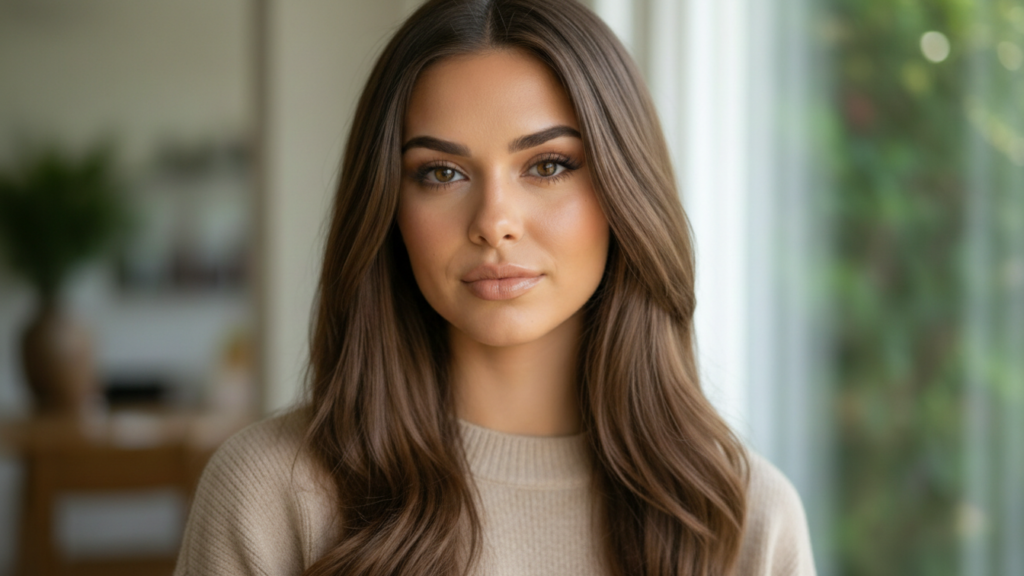
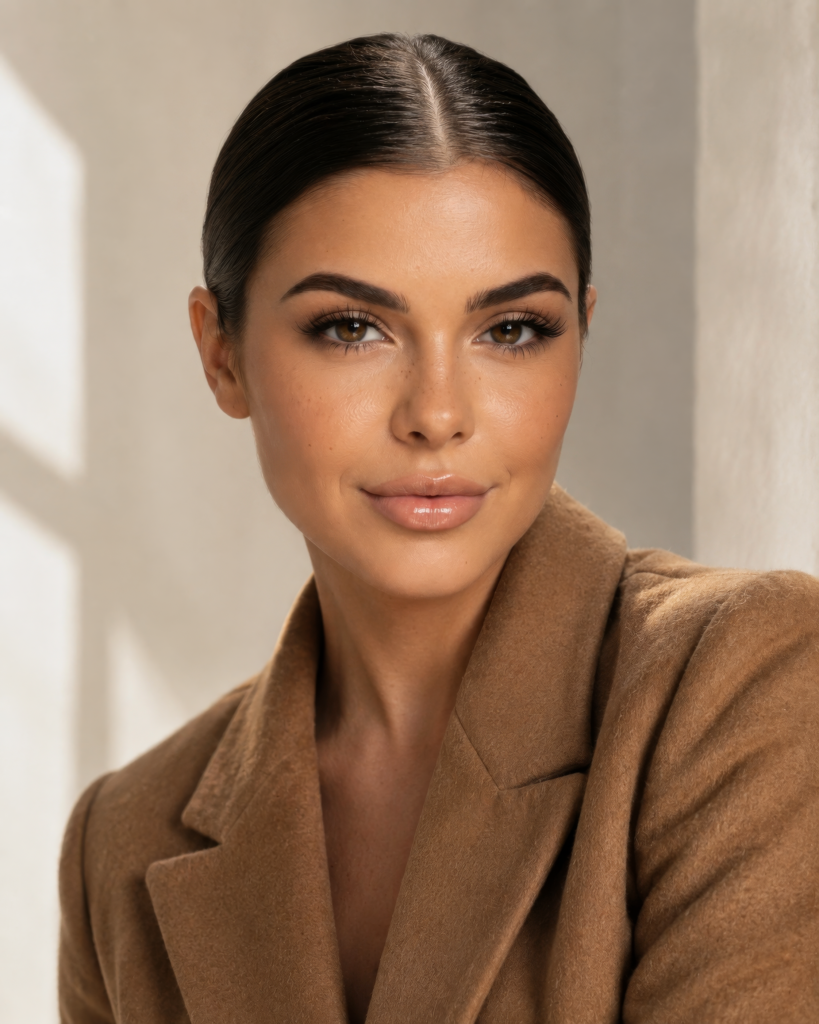
There is a particular kind of woman who looks like she woke up that way. Skin that catches light rather than reflecting it. A mouth that reads as her mouth, only better. Nothing on her face announces itself, and yet the whole thing is unmistakably considered.
People assume she is wearing nothing. She is wearing very little, chosen very carefully, and that is an entirely different proposition.
Minimal makeup gets sold as the easy option — the thing you do when you are running late or cannot be bothered. I would argue it is the harder discipline. Maximalism forgives. A bold lip covers a multitude of sins, a strong eye distracts from an uneven base, and glitter hides everything. Minimal makeup has nowhere to hide. Every choice is visible precisely because there are so few of them.
This is the case for doing it properly.
What Minimal Makeup Actually Means
Let us dispense with the obvious misreading first. Minimal makeup is no makeup. It is not the absence of effort, and it is certainly not the absence of skill.
The principle is the same one that governs a good wardrobe: fewer things, better chosen, working harder. A minimal makeup routine typically runs to five or six products rather than fifteen, and each one earns its place by doing something the others cannot. Nothing is there out of habit. Nothing is there because it came in a set.
What separates this from simply owning less makeup is intention. A minimal makeup approach starts from a question — what does this face actually need today? — rather than from a sequence you perform on autopilot. Some days, the answer is concealer and a lip balm. Some days it is more. The routine flexes; the philosophy does not.
The other defining quality is restraint at the finish. Minimal makeup stops before the point most tutorials consider the beginning. No contour carved into the cheekbone, no lash that reads as lash, no line where the foundation ends and the neck begins. The goal is not to look untouched. It is to look like the version of yourself you would be on an unusually good day.
Why Less Reads are More Expensive
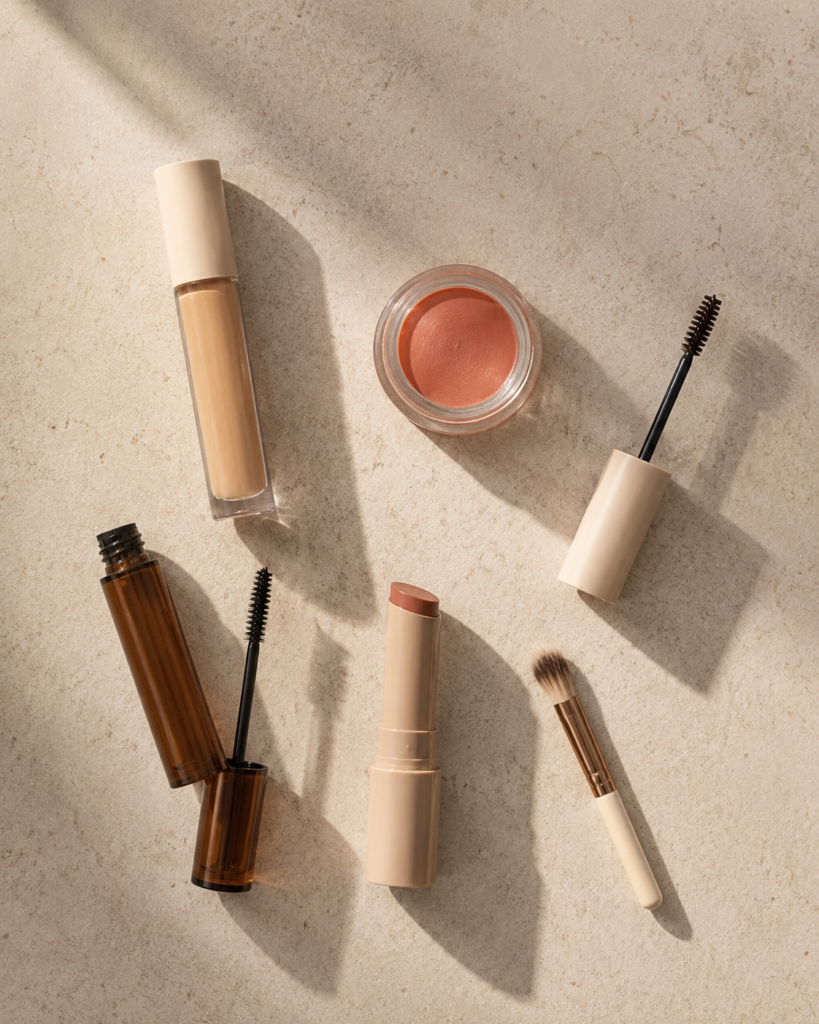
There is a reason minimal makeup has become the visual shorthand for a certain kind of moneyed ease, and it is not accidental.
Heavy makeup signals an occasion. It says I am going somewhere, and I am prepared. That can be wonderful — I am not against a full face, and there are nights that call for one. But it locates you in a specific moment, and moments end.
Minimal makeup signals maintenance instead. It suggests that this is simply how you look, most days, without ceremony. The implication is a life in which good skin, good sleep, and good light are unremarkable. Whether or not that is true is beside the point. The aesthetic sells the idea.
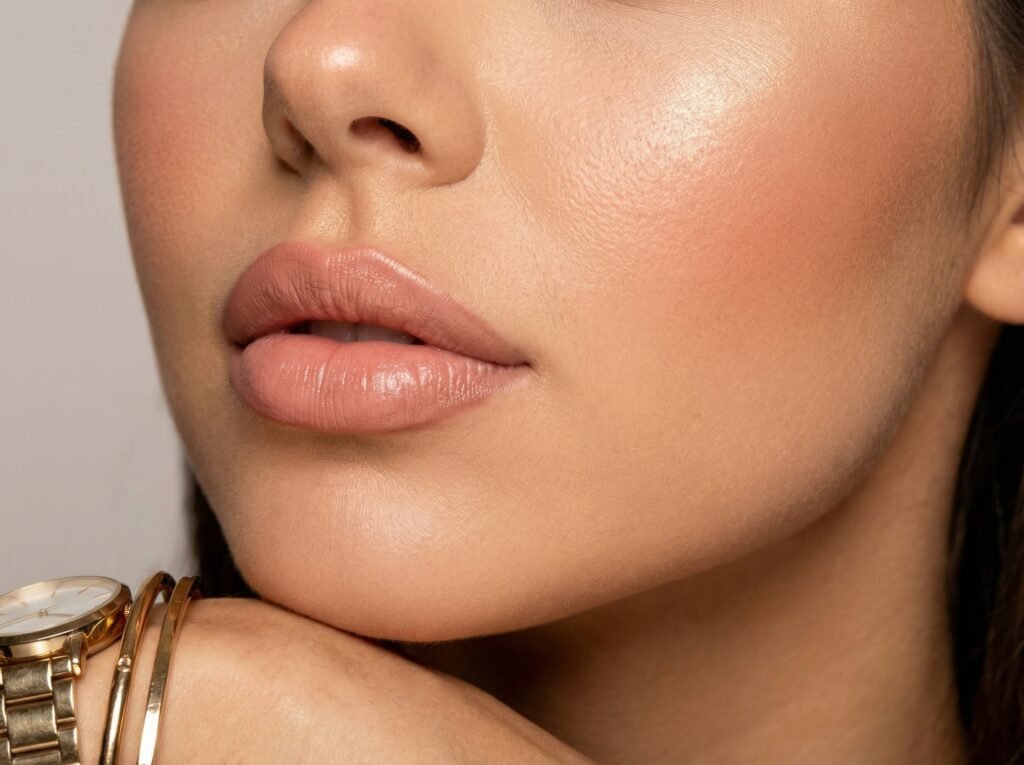
There is also a straightforward optical argument. Skin that is allowed to look like skin — with pores, with texture, with the faint unevenness of an actual human face — reads as expensive because it reads as real. A heavy matte base flattens everything into a mask, and masks always look like masks, however costly the product underneath.
This is the same logic that governs quiet luxury in clothing. The blazer that fits properly does not need a logo. The face that is well cared for does not need covering.
The Minimal Makeup Edit
If I were building a minimal makeup routine from nothing, this is the order I would build it in. Not a shopping list — a hierarchy. Each layer earns the next.
Skin first, and skin properly. Everything that follows sits on this. A hydrating base, given time to actually absorb, does more for the finished look than any product applied on top of it. Rushing this step is the single most common reason minimal makeup fails: product applied to dry or unprepared skin clings to texture and separates by midday.
Correction, not coverage. Rather than a full face of foundation, place a small amount of concealer only where it is needed — around the nose, under the eyes, on any specific spot that bothers you. Blend with a finger, which warms the product and thins it. Most faces need coverage in perhaps fifteen percent of the area we routinely cover.
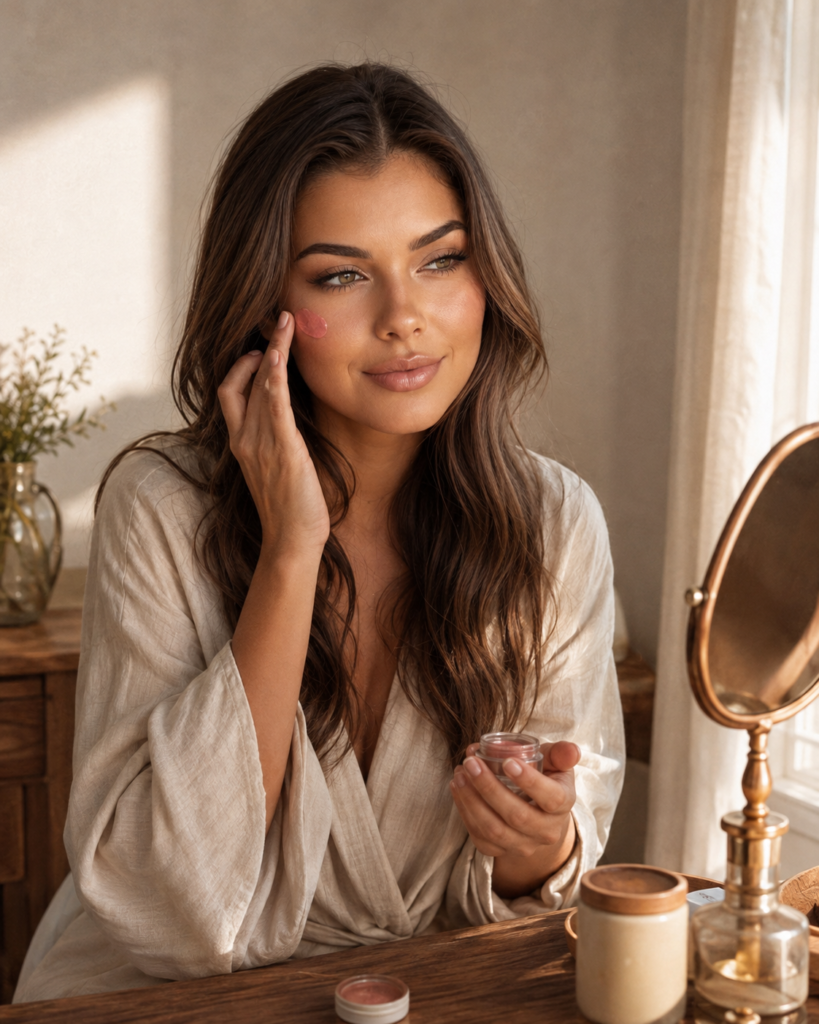
Something to bring back warmth. Correction removes tone as well as flaw. A cream blush, pressed high on the cheek and blended toward the temple, restores what concealer takes away. Cream over powder, always, in a minimal makeup context — it sits in the skin rather than on it.
Brows, but honestly. Brushed up, held in place, filled only where there is a genuine gap. A drawn-on brow undoes the entire premise in one stroke.
Lashes, optional. One coat, roots only, no formula that promises volume. Or curl them and skip mascara entirely, which is what I do more often than not.
A lip that looks like a lip. Tinted balm, a sheer stain, something with slip. If it needs a liner to look correct, it is the wrong product for this routine.
Six steps, most of them measured in seconds. The whole thing takes under ten minutes once you stop deliberating.
The Mistakes That Undo It
Minimal makeup fails in predictable ways, and almost all of them come from applying full-glam logic to a minimal-glam brief.
Setting powder everywhere. Powder is a corrective for a specific problem — shine in a specific place. Dusted across the whole face, it strips the light that makes minimal makeup work at all.
Matching the wrong finish. Dewy skin with a matte lip reads as unfinished. Matte skin with a glossy lip reads as unbalanced. Pick a register and stay in it.
Under-blending because there is less product. Smaller amounts still need to disappear at the edges. A cream blush with a visible boundary is more noticeable than a heavy one that is properly diffused.
Treating minimal as a fixed formula. The five-product routine that works in July will not work in January. Minimal makeup is responsive by definition — same philosophy, different execution, depending on what your skin is doing.
Buying minimal. There is an entire industry selling the aesthetic back to you in the form of eleven products with beige packaging. Minimal makeup that requires eleven products is not minimal makeup. It is a marketing campaign.
Who This Actually Suits
Nearly everyone is the honest answer, but the approach shifts.
On mature skin, minimal makeup tends to be more flattering than full coverage, not less — product settles into fine lines, and less product settles less. The emphasis moves toward hydration and cream textures, away from anything that promises to blur or fill.
On very clear skin, the routine can compress almost to nothing: blush, brow, balm. On skin that is genuinely troubling you, minimal makeup still works, but the correction step does more of the labour and takes more care.
The one context where I would not reach for it is photography under harsh light, where cameras flatten dimension, and a minimal makeup face can read as washed out. That is a technical problem, not an aesthetic one, and it is the exception rather than the rule.
The Longer Point
I think the appeal of minimal makeup right now is not really about makeup. The forecasters have called it dead more than once, and they are not wrong about the data — only about what it means.
We have spent a decade being sold intensity — more steps, more products, more transformation. The pendulum swinging back toward restraint is the same instinct that produced quiet luxury in clothing and slow interiors in the home. People are tired of putting in effort and would like, for a while, to look like themselves.
That is worth taking seriously. But it is worth doing well, too. Restraint practised badly just looks like giving up, and there is a meaningful difference between a face that has been thoughtfully edited and one that has simply been neglected.
Minimal makeup, done properly, is not the absence of a decision. It is a series of small, deliberate ones — and then the discipline to stop. That last part is the whole skill. If you want a little more definition than this without going dramatic, soft glam is the natural next step.
— Elina