
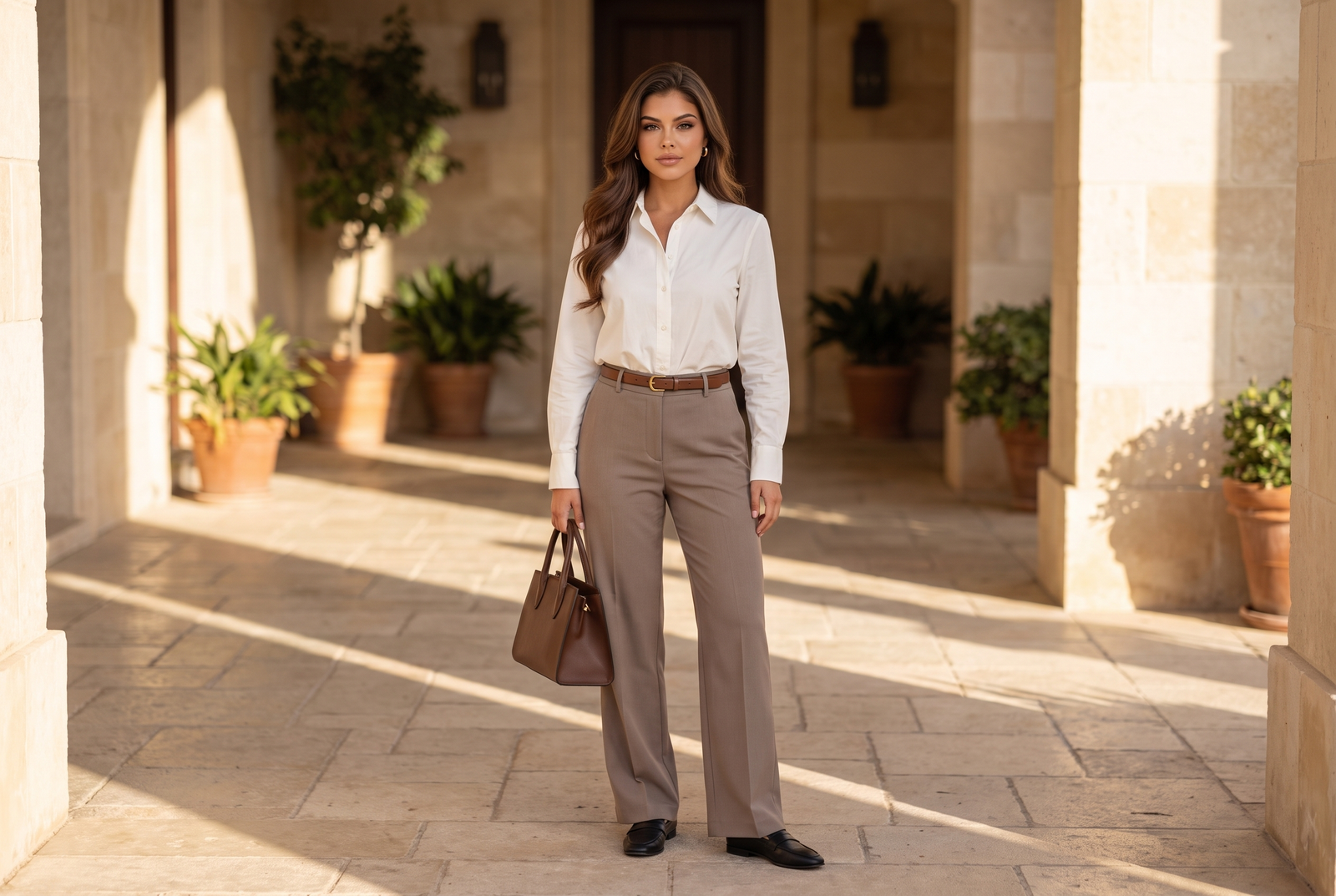
How to Make an Outfit Look Expensive: 8 Thoughtful Details
Affiliate Disclosure: Some links on this page are affiliate links. Marin Brands LLC may earn a commission if you make a purchase through them, at no additional cost to you. As an Amazon Associate, I earn from qualifying purchases.
An outfit can be simple, comfortable, and reasonably priced while still looking beautifully considered. If you have been wondering how to make an outfit look expensive, start with the details you can adjust before buying anything: the way a shirt sits, the length of a trouser hem, the condition of your shoes, and the relationship between your accessories.
Here, “expensive” means polished and intentional. It does not mean hiding your budget, dressing for someone else’s approval, or filling a wardrobe with designer labels. A favourite shirt worn well can do more for an outfit than a new purchase that never feels quite right.
The quiet luxury approach is useful because it encourages attention to shape, texture, and restraint. You can borrow those principles whether your style is feminine, minimal, colourful, or a mixture of all three.
How to Make an Outfit Look Expensive: 8 Thoughtful Details
An outfit can be simple, comfortable, and reasonably priced while still looking beautifully considered. If you have been wondering how to make an outfit look expensive, start with the details you can adjust before buying anything: the way a shirt sits, the length of a trouser hem, the condition of your shoes, and the relationship between your accessories.
Here, “expensive” means polished and intentional. It does not mean hiding your budget, dressing for someone else’s approval, or filling a wardrobe with designer labels. A favourite shirt worn well can do more for an outfit than a new purchase that never feels quite right.
The quiet luxury approach is useful because it encourages attention to shape, texture, and restraint. You can borrow those principles whether your style is feminine, minimal, colourful, or a mixture of all three.
Begin with what you own. These eight details will help you see it differently.
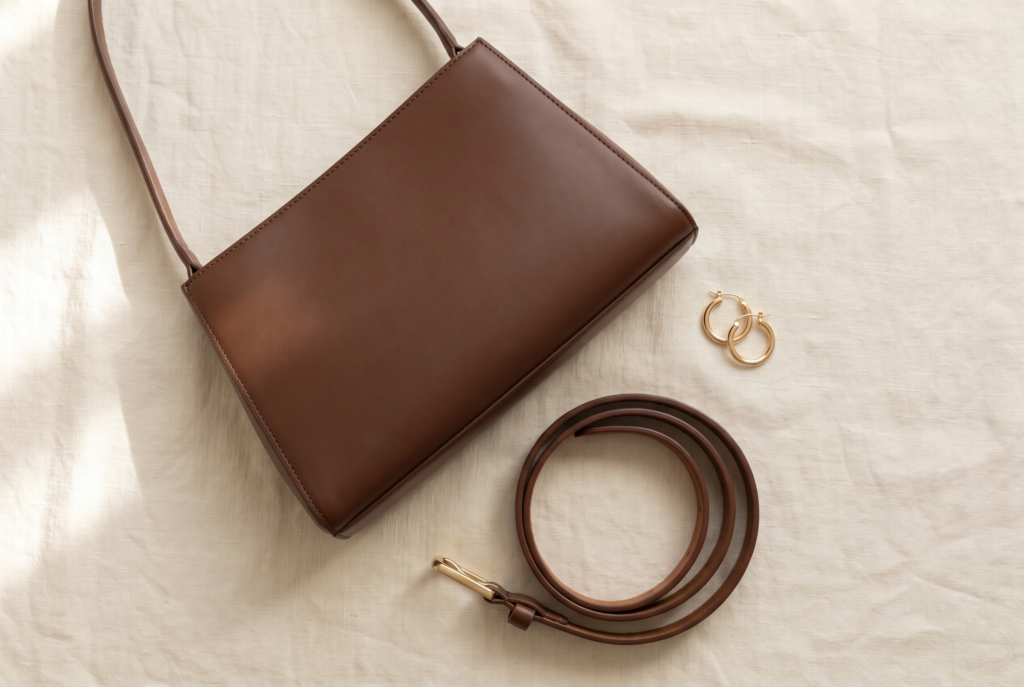
1. Give a simple outfit structure with a handbag
Imagine a soft knit, straight-leg jeans, and flat shoes. The combination is easy and comfortable. Add a bag with a defined shape, and the outfit gains a more deliberate finishing point.
Structure does not have to mean stiff or formal. A softly squared tote, a small top-handle bag, or a shoulder bag with a clear outline can all work. Look for neat edges, an opening that suits your daily routine, and hardware that complements the bag rather than overwhelms it.
Choose the size for your actual day. A tiny bag that leaves you carrying three extra items is less useful than a medium bag that comfortably holds your essentials. Black, chocolate, tan, and taupe are easy starting points, but a rich burgundy can be equally versatile in the right wardrobe.
Try this with what you own: Empty your everyday bag, remove unnecessary extras, and check whether overfilling has distorted its shape. Wipe it down according to its care instructions.
If your wardrobe needs this kind of finishing piece, explore structured everyday handbags on Amazon.
2. Use a belt to make proportions feel intentional
A belt can do more than hold trousers in place. It creates a visual break between a top and bottom, which can make an otherwise loose outfit feel more defined.
With high-waisted trousers, try a narrow or medium-width belt and a partial shirt tuck. With jeans and a knit, let a small section of the buckle show rather than arranging the whole outfit around it. The effect should feel easy enough to live in.
Pay attention to scale. A substantial buckle can look beautiful, but it may compete with a large necklace or a heavily detailed bag. With several accessories, a simple buckle gives the eye somewhere to rest.
Your belt and shoes do not need to match exactly. For example, brown leather with brown suede can feel more interesting than identical finishes. Start with tones that sit comfortably together.
Try this with what you own: Wear the same outfit with and without a belt. Take a quick photograph of each and compare where your eye travels.
A simple leather belt with a discreet buckle on Amazon is an option if a belt would make pieces you already own easier to wear.
3. Let a well-fitting shirt do the work
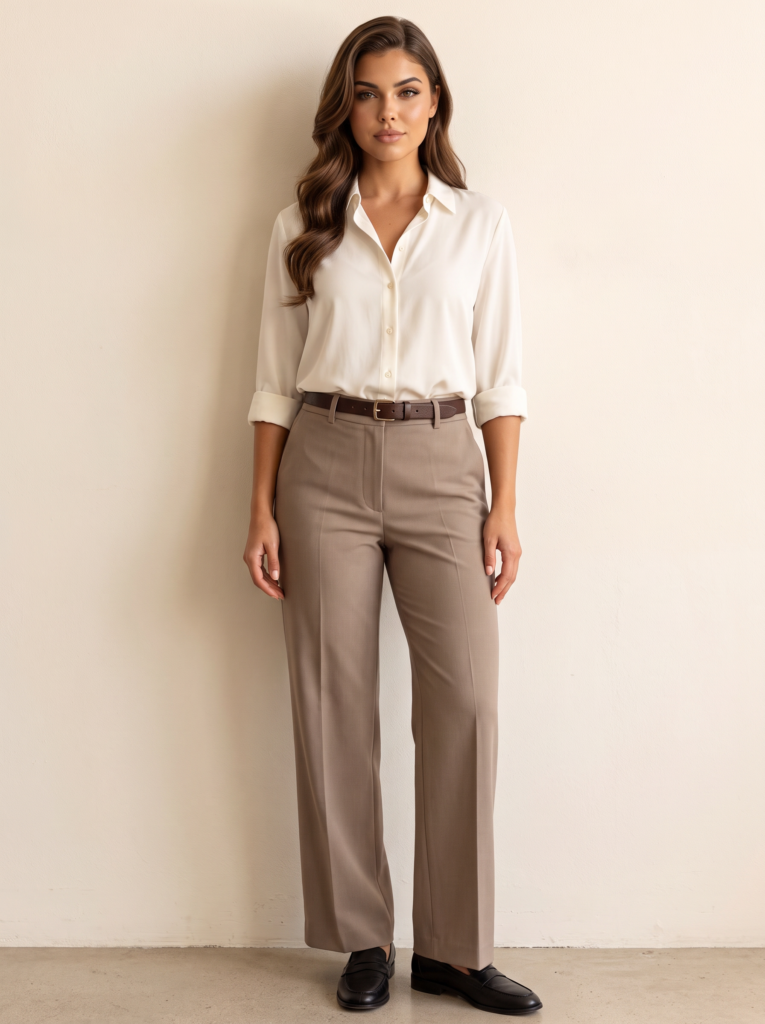
A button-down shirt is useful because a few small changes can completely alter its mood. Fully buttoned with tailored trousers, it feels composed. Open at the neck with rolled sleeves, it becomes more relaxed. Worn loose over a simple base, it can act as a light layer.
The important detail is how it behaves on your body. Check that the buttons lie comfortably when you sit, that you can move your arms, and that the collar sits the way you want it to. A deliberately oversized shirt should still feel like a choice you made rather than a fit you are constantly adjusting.
White is an obvious option, but it is not compulsory. Ivory, pale blue, soft stripes, or a muted shade you already wear often may suit your wardrobe better. Check the fabric’s opacity in daylight, particularly if you want to wear it without an additional layer.
Try this with what you own: Open one button at the neck, roll the sleeves evenly, and tuck only the front. Then decide whether you prefer the cleaner line of a full tuck.
For a starting point, browse cotton button-down shirts on Amazon, checking the listed fabric composition and garment measurements.
4. Get the trouser length right for your shoes
When considering how to make an outfit look expensive, trouser length is an easy detail to overlook. A beautiful pair can feel awkward if the hem catches under your heel, drags along the ground, or stops at a point you did not intend.
Try trousers with the shoes you expect to wear most often. A length that works with heels may need adjusting for flats. Wide-leg styles can look especially fluid when the hem falls cleanly without collecting beneath the shoe.
There is no single correct silhouette. Wide-leg trousers, straight cuts, and tapered styles can all look polished. What matters is whether the waistband feels comfortable, the pockets lie as you prefer, and the fabric moves without needing constant adjustment.
If something is nearly right, consider whether a simple alteration would make it useful. Hemming a pair you already like may be a better use of your budget than buying another almost-right pair.
Try this with what you own: Put on your usual shoes and inspect your trousers from the side and back. Temporarily pin a possible hem adjustment while standing still to assess the length; remove the pins before walking around.
If you are filling a wardrobe gap, consider tailored wide-leg trousers on Amazon, using the inseam and size chart to narrow your choices.
5. Choose shoes that support the whole outfit
Shoes can change how the same clothes feel. Loafers make a shirt and trousers feel grounded. Ballet flats soften the combination. A simple boot can give it more weight and presence.
Rather than searching for a shoe that looks expensive on its own, think about how it meets your clothes. Does the trouser hem fall neatly over it? Does the shape work with the skirt length? Can you walk comfortably enough to enjoy the day?
For understated loafers, a clean outline and restrained hardware are useful starting points. Black is practical for many wardrobes, while brown or burgundy can add warmth to cream, navy, and denim. Comfort and a secure fit deserve as much attention as appearance.
Condition matters, too. Dusty uppers, worn laces, and damaged heels can distract from a carefully styled outfit. Follow the material’s care instructions, and consider a repair when the shoes are otherwise worth keeping.
Try this with what you own: Clean your most-worn pair and wear it with a slightly different trouser or skirt length. Sometimes the missing detail is proportion rather than another pair of shoes.
Browse minimal loafers on Amazon if this is a style your existing wardrobe would benefit from.
6. Give jewellery a clear role
Jewellery does not have to disappear for an outfit to feel refined. The useful question is which piece you want people to notice first.
Small hoops can frame the face without competing with a patterned blouse. A sculptural cuff might be enough beside a simple neckline. If you prefer layers, repeat a shape or finish so the pieces feel connected.
Gold-tone jewellery can bring warmth to cream, brown, and black, while silver can look beautiful with cool neutrals. Neither is inherently more elegant. Choose the finish that works with your preferences, and mix metals if you enjoy the result.
For earrings, consider weight, fastening, and the listed metal composition. If you have sensitivities, check those details carefully rather than relying on a product’s appearance or a broad marketing label.
Try this with what you own: Get dressed, choose one focal piece, and give it room. You may find that removing an accessory makes the remaining pieces easier to appreciate.
For a subtle finishing detail, explore small gold-tone hoop earrings on Amazon.
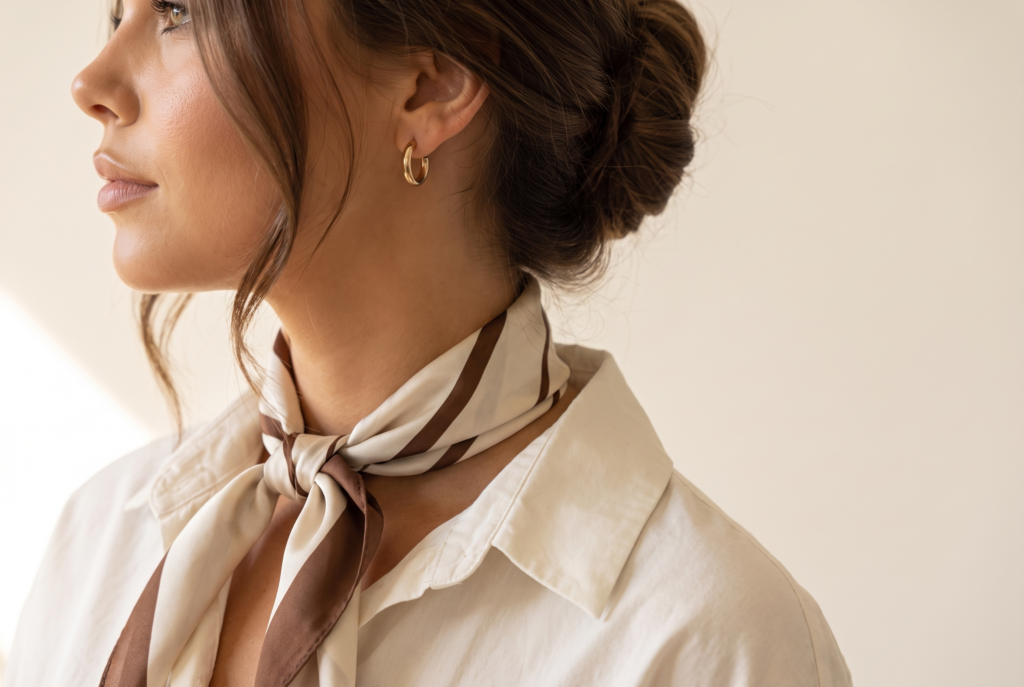
7. Add softness with a lightweight scarf
A scarf brings texture and movement to an outfit without requiring another major garment. A small square can sit neatly at the neck; a longer scarf can fall loosely over a shirt or light knit.
Start by picking up a colour already present in your outfit. A cream-and-brown print can connect a pale shirt with darker trousers. A muted blue scarf can bring interest to navy and denim. You can also choose a contrasting colour and let it be the main accent.
Fabric and scale change the effect. A small, smooth scarf feels different from an oversized woven wrap. Silk and satin are not interchangeable descriptions: silk describes a fibre, while satin describes a weave and can be made from different fibres. Check the composition if the material matters to you.
Keep the styling uncomplicated. If you are adjusting a knot all day, try a looser fold or another placement. You can also tie a small scarf to a bag handle if you prefer colour away from your face.
Try this with what you own: Fold a scarf into a narrow band and try one loose knot at the neck. Compare it with the same outfit without the scarf.
For an optional accent, browse lightweight square satin scarves on Amazon, checking dimensions as well as colour.
8. Finish with garment care
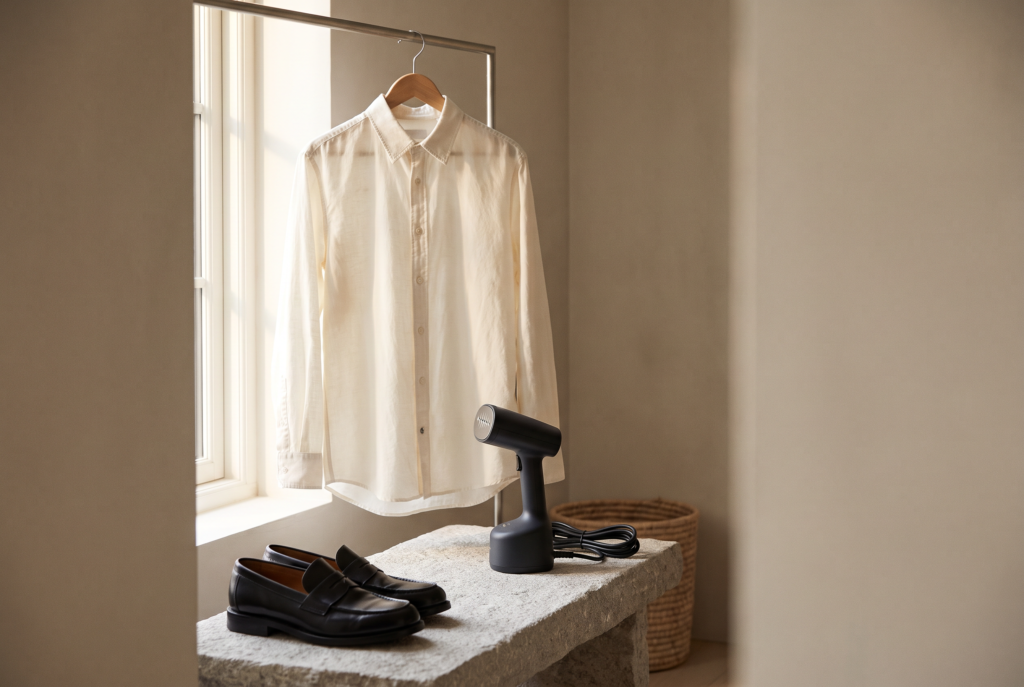
Sometimes the detail an outfit needs is five minutes of attention. A creased shirt, visible lint, or a loose thread can distract from clothes you otherwise love.
Before leaving, look at the outfit in natural light. Smooth the collar, check the cuffs, remove lint with a tool suitable for the fabric, and make sure layers sit comfortably. These small tasks help clothes look cared for without changing your personal style.
A steamer can be useful for some garments, but it is not suitable for everything. Follow both the garment care label and the appliance instructions; do not steam clothes while wearing them. Some pieces are better pressed, professionally cleaned, or left with their natural texture.
Storage helps as well. Give clothes enough room to hang, fold knitwear when appropriate, and put clean items away in a way that makes them easy to wear again.
Try this with what you own: Prepare tomorrow’s outfit tonight. Check it for creases, lint, missing buttons, and anything that needs attention before the morning rush.
If it suits your clothes and routine, a handheld garment steamer on Amazon may be a practical wardrobe-care addition.
How to make an outfit look expensive without buying anything
Choose one outfit you already wear and make three small adjustments. Try a different tuck, change the shoes, and remove an accessory that competes with the rest. Then check the overall line in a mirror.
An easy formula is a shirt or knit, trousers or jeans that fit comfortably, clean shoes, and one considered finishing detail. Repeat a colour somewhere in the outfit if it helps the pieces feel connected, but leave room for personality. A colourful scarf, a favourite vintage bag, or an unusual piece of jewellery can belong in a polished wardrobe just as comfortably as neutral basics.
If you decide to buy something, choose the item that solves a specific problem. Perhaps you need a belt to make your trousers work, comfortable shoes for pieces you rarely wear, or a bag that holds what your day requires. You do not need all eight items in this guide.
The most useful answer to how to make an outfit look expensive is to notice what helps it feel complete. Fit, proportion, care, and a few details you enjoy will take you further than a wardrobe full of things you bought for an imagined version of your life.
For a similarly considered approach to beauty, read Minimal Makeup: The Case for Doing Less, Properly.
A few common styling questions
Do neutral colours always look more expensive?
No. Neutrals can make mixing pieces simpler, but colour can look equally polished. Pay attention to how colours work together and whether the fit and finish support the look you want.
Do I need designer accessories?
No. Choose accessories for their usefulness, construction, and relationship to your clothes. A label does not guarantee that a piece will suit your wardrobe.
What should I fix first on a limited budget?
Start with care and fit. Clean your shoes, prepare your clothes, and check whether a small repair or alteration would bring a favourite piece back into regular use. Shop only when you can name the gap you are filling.